Indian River County Court serves as a local trial court within Florida’s judicial system, handling a wide range of legal matters that affect residents, businesses, and visitors in the county. The court hears cases that fall within its legal jurisdiction, including civil disputes, misdemeanor criminal cases, traffic violations, and small claims matters. It works alongside the Circuit Court to keep the judicial process organized and efficient. Through its court administration and judicial services, the court helps resolve cases fairly while maintaining public confidence in the legal system. This page provides a clear starting point for anyone seeking reliable information about the court and its services.
Indian River County Court Florida offers many public services beyond courtroom proceedings, making it an important resource for legal information and court-related needs. Visitors can find details about Indian River County Court Records, court jurisdiction, courthouse services, and available legal resources in one place. The page also introduces important topics such as case search, court docket, Clerk of Court services, criminal court, public records, and marriage and divorce records, with links to dedicated pages for more detailed information. Whether someone needs basic court information or wants to explore specific services, this page brings together the key resources that help users locate accurate and up-to-date court information quickly.
How to Search Indian River County Court Records Online
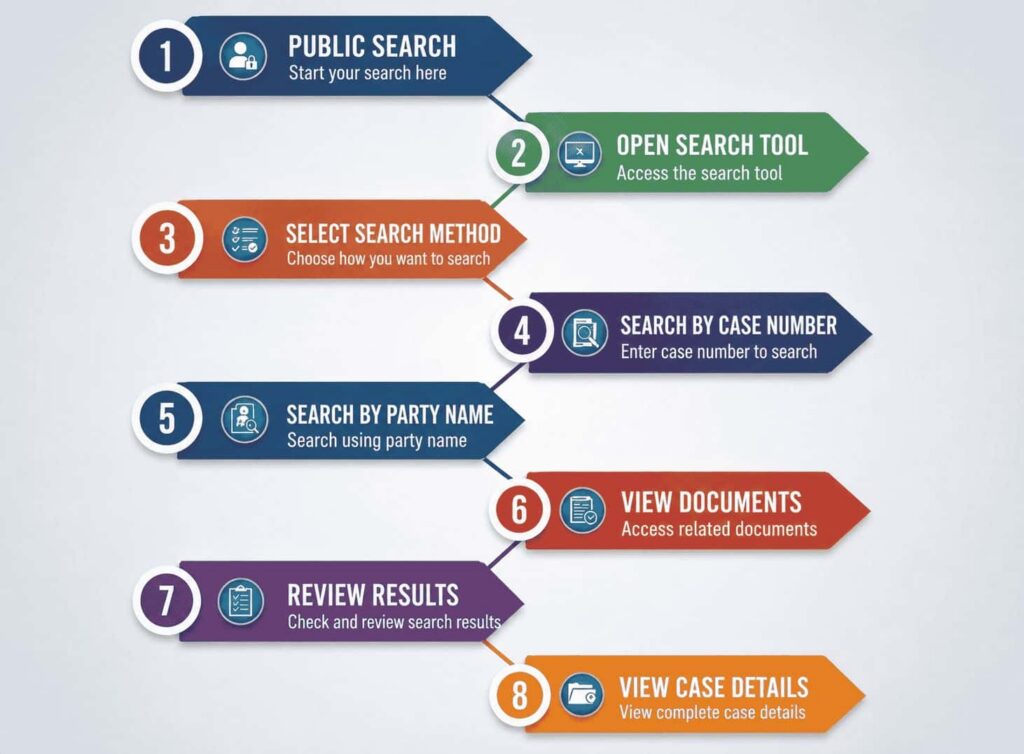
The official Online Case View allows the public to search many civil, criminal, and traffic court cases without creating an account. Users can search with a case number or party name and view available case details, court dates, filings, and many document images.
Open the Official Search Tool
Go to the Online Case View page using the official Clerk of Court website.
Official URL : https://indianriverclerk.com/court-records/online-case-view
This is the official search portal maintained by the Indian River Clerk of the Circuit Court & Comptroller. It provides free public viewing of eligible court case information.
Choose Public Search
No registration is required for standard public searches.
Registered users, such as attorneys or approved users, may receive additional search options and document access for eligible case types.
Select a Search Method
The search portal supports several lookup methods.
| Search Method | Best Used When |
|---|---|
| Case Number | The complete case number is available. |
| Party Name | Searching for an individual or business involved in a case. |
| Case Type | Searching within a particular type of court case, when available. |
Entering the complete case number usually provides the most accurate result. Party name searches may return multiple matches, especially for common names.
Enter the Search Information
Provide the available details.
Examples include:
- Complete case number
- First name
- Last name
- Business or organization name
- Case type (if available)
Review the Search Results
After selecting Search, the system displays available matching cases.
Results may include:
- Case number
- Case type
- Filing date
- Party names
- Court division
- Case status
- Scheduled court dates
- Charges (for eligible criminal cases)
- Sentences (where publicly available)
- Complaints
- Available document images
Open the Case Details
Select the desired case from the results list.
The case page may contain:
- Court events
- Hearing schedule
- Docket entries
- Filed documents
- Judge assignment
- Case history
- Document images for eligible cases
Court Divisions and Case Types
The court manages a variety of legal proceedings that fall within its county-level jurisdiction. Each division is responsible for a particular category of cases, allowing judges and court staff to follow established procedures for hearings, filings, and case management. While some matters remain within the County Court, others may be transferred to the Circuit Court if they exceed the court’s legal authority. The sections below introduce the primary case types handled by the Indian River County Court.
Civil Cases
Civil cases involve legal disputes between two or more parties where money, property, contracts, or personal rights are involved rather than criminal charges. The Indian River County Court hears civil matters that fall within the monetary limits established by Florida law. Many civil cases are resolved through court hearings, settlements, or judgments. Depending on the nature of the dispute, parties may present evidence, file legal documents, and attend scheduled hearings before a judge.
Common examples of civil cases include:
- Landlord and tenant disputes
- Contract disagreements
- Property damage claims
- Consumer disputes
- Debt collection cases
- Other civil actions within the court’s jurisdiction
Criminal Cases
The criminal division handles cases involving misdemeanor offenses committed within Indian River County. These proceedings determine whether a defendant has violated state or local criminal laws and establish the appropriate legal outcome based on the evidence presented. A criminal case often moves through several stages before reaching a final decision. The process may include an initial appearance, arraignment, pretrial hearings, plea negotiations, trial, and sentencing when applicable.
The County Court commonly handles:
- Misdemeanor offenses
- Criminal traffic offenses
- County ordinance violations carrying criminal penalties
Felony cases are generally handled by the Circuit Court, which has broader jurisdiction over more serious criminal matters.
Traffic Cases
The traffic division manages cases involving traffic citations and other motor vehicle violations. Drivers may need to appear before the court depending on the type of offense, while some matters can be resolved through payment or other legal options permitted by Florida law.
Traffic-related proceedings may involve:
- Speeding violations
- Red light violations
- Driving without a valid license
- Vehicle registration issues
- Insurance-related violations
- Other non-felony traffic offenses
The court reviews each case individually and determines the appropriate outcome based on the applicable laws and the facts presented.
Small Claims Cases
The small claims division provides a simpler court process for resolving lower-value financial disputes. It is intended for cases involving limited monetary amounts and is commonly used by individuals and small businesses seeking a legal resolution without lengthy court proceedings.
Small claims cases often include:
- Unpaid invoices
- Security deposit disputes
- Minor property damage
- Consumer complaints
- Breach of simple agreements
Many small claims matters are resolved through mediation or settlement before reaching a final hearing, helping parties save time and court resources.
County Ordinance Violations
County ordinance violations involve alleged breaches of local laws adopted by Indian River County. These regulations help protect public health, safety, property standards, and community welfare.
Examples of ordinance violations may include:
- Property maintenance violations
- Noise complaints
- Zoning violations
- Animal control issues
- Local code enforcement matters
Depending on the violation, the court may impose fines, order corrective action, or issue other penalties authorized under county ordinances and Florida law. Each case is reviewed according to established legal procedures to provide a fair outcome for all parties involved.
Court Jurisdiction and Responsibilities
The court serves residents, businesses, visitors, and legal professionals by handling cases assigned under Florida law. Every case follows established court procedures, helping maintain consistency and fairness throughout the legal process. Along with hearing cases, the court works closely with the Clerk of Court, law enforcement agencies, attorneys, and other judicial offices to keep court operations running efficiently. The following sections explain the types of cases handled by the court, its primary responsibilities, and its place within Florida’s court system.
Cases Heard by the Court
The Indian River County Court hears legal matters that fall within its county-level jurisdiction. These cases are generally less complex than those handled by the Circuit Court but still require formal court proceedings and judicial review.
Common case types include:
- Civil disputes within the court’s monetary jurisdiction
- Misdemeanor criminal offenses
- Traffic violations
- Small claims cases
- Landlord and tenant disputes
- County ordinance violations
Each case is assigned to the appropriate court division, where judges review evidence, hear testimony, interpret applicable laws, and issue legally binding decisions. If a case exceeds the County Court’s legal authority, it may be transferred to the Circuit Court for further proceedings.
Court Responsibilities
The court performs several important functions that support the local judicial system and help legal matters move through the court process efficiently. These responsibilities extend beyond courtroom hearings and include case management, judicial decision-making, and maintaining public confidence in the legal system.
Key responsibilities include:
- Conducting court hearings and trials
- Interpreting and applying Florida law
- Protecting the legal rights of all parties
- Issuing judgments and court orders
- Managing court schedules and proceedings
- Promoting fair and impartial judicial services
Judges, court staff, and the Clerk of Court each play a distinct role in carrying out these responsibilities. Their coordinated efforts help maintain accurate court records, organize hearings, and support the administration of justice throughout Indian River County.
Role Within Florida’s Judicial System
The Indian River County Court forms part of Florida’s unified state court system, working alongside the Circuit Court and appellate courts to provide an organized judicial structure. Each level of the court system has defined responsibilities, allowing cases to be handled by the court with the appropriate legal authority.
At the county level, the court focuses on resolving local legal matters efficiently while providing public court services and maintaining transparent court operations. Through its judicial services, courtroom proceedings, and case management functions, the court helps uphold the rule of law and provides residents with a reliable forum for resolving legal disputes. This coordinated structure supports consistent legal decisions and strengthens public trust in Florida’s judicial system.
Court Services Available to the Public
The Indian River County Court provides a variety of public services that help residents, businesses, attorneys, and visitors manage court-related matters efficiently. These services include case search, court records, docket information, Clerk of Court assistance, marriage and divorce records, court forms, and jury services. The court works closely with the Clerk of Court to provide reliable judicial services and public resources. Many services are available online, allowing users to check case information, review official records, download forms, and prepare for court without visiting the courthouse. The following sections highlight the primary services available through the court and explain where to find more detailed information.
Clerk of Court Services
The Clerk of Court supports the daily operations of the court by managing court files, maintaining official records, and providing administrative services to the public. The office serves as the central location for many court-related requests and helps keep legal proceedings organized from filing through case completion.
Common Clerk of Court services include:
- Filing court documents
- Maintaining official court records
- Processing certified copy requests
- Recording legal documents
- Marriage license services
- Passport application services
- Collecting court fees and payments
Case Search
The Case Search service allows users to locate court cases by entering available case details through the official search portal. Searching by case number usually provides the most accurate results, though many cases can be found using a party’s name.
A case search may display:
- Case status
- Filing date
- Court division
- Hearing dates
- Parties involved
- Case information
- Available court files
Court Docket
The Court Docket provides information about scheduled hearings and courtroom activities. Attorneys, litigants, and members of the public often use the docket to confirm hearing dates and review upcoming court proceedings.
A court docket may include:
- Hearing schedules
- Court dates
- Courtroom assignments
- Judge assignments
- Case events
- Docket entries
Public Records
The court maintains many public records that are available under Florida law. These records help promote transparency by allowing eligible court documents and case information to be viewed by the public.
Examples of available public records include:
- Civil case records
- Criminal case records
- Traffic case records
- Small claims records
- Court filings
- Judgments and court orders
Some records remain confidential due to state laws protecting sensitive personal or legal information. Record availability depends on the case type and applicable legal requirements.
Marriage & Divorce Records
Marriage and divorce records are commonly requested for legal, financial, and personal purposes. The Clerk of Court maintains marriage records, while divorce records become part of court proceedings handled through the judicial system.
Available services may include:
- Marriage license information
- Marriage certificate requests
- Divorce case records
- Certified record copies
- Record request procedures
Court Forms
Court forms help parties begin legal proceedings, respond to court actions, or submit required documents during a case. Using the correct form helps reduce filing errors and supports efficient court administration.
Common court forms include:
- Civil filing forms
- Small claims forms
- Criminal court forms
- Traffic-related forms
- Family court documents
- Financial affidavits
Jury Services
Jury service allows qualified residents to participate in the judicial process by serving as jurors during eligible court proceedings. Citizens selected for jury duty receive instructions about reporting dates, qualification requirements, and courtroom procedures.
Information commonly available through jury services includes:
- Jury summons instructions
- Reporting schedules
- Qualification requirements
- Excusal and postponement requests
- Frequently asked jury questions
Court Procedures and Visitor Information
Whether attending a hearing, filing legal documents, serving on a jury, or requesting court records, knowing what to expect before arriving can make the visit more efficient. The court has established procedures to maintain safety, protect the rights of everyone involved, and support fair legal proceedings. Reviewing the information below before visiting the courthouse can help visitors avoid common issues and prepare for their court appearance.
Preparing for Your Court Visit
Planning ahead can make a court visit less stressful and help prevent unnecessary delays. Visitors should confirm the hearing date, courtroom location, and scheduled time before arriving at the courthouse. Arriving at least 30 minutes early provides enough time for parking, security screening, and finding the correct courtroom. It is helpful to review any notices received from the court and check for schedule changes before leaving for the courthouse. If legal representation is involved, visitors should bring any documents or instructions provided by their attorney.
Required Documents
The documents needed may vary depending on the purpose of the visit. Bringing complete and accurate paperwork helps court staff process requests more efficiently and allows hearings to proceed without avoidable interruptions.
Commonly required documents include:
- Court notice or hearing notice
- Valid government-issued photo identification
- Case number, if available
- Court forms or supporting documents
- Payment receipt, if applicable
- Any evidence or records requested by the court
Courtroom Rules
Every courtroom follows procedures that promote respect, fairness, and orderly legal proceedings. Visitors are expected to behave professionally and follow directions from the judge and court staff throughout the hearing.
Some basic courtroom expectations include:
- Arrive before the scheduled hearing time.
- Silence or turn off mobile phones and electronic devices.
- Speak only when instructed by the judge.
- Dress in clean and appropriate clothing.
- Avoid food, drinks, and unnecessary conversations inside the courtroom.
Security Screening
All visitors entering the courthouse are subject to security screening. Security officers inspect people and personal belongings before allowing entry into the building. These procedures help maintain a safe environment for judges, court staff, attorneys, jurors, and members of the public. Visitors may be asked to pass through a metal detector, and bags or personal items may be inspected. Bringing only necessary belongings can help move through the screening process more quickly.
Online Court Resources
Online court services make it easier to prepare for hearings, review schedules, complete required paperwork, and manage certain court obligations from any location. Many of these resources are maintained by the Indian River Clerk of the Circuit Court & Comptroller, helping residents, attorneys, and businesses find official court information quickly and efficiently.
Court Forms
Court forms are used to begin legal proceedings, respond to court actions, or submit required information during an active case. Using the correct form helps reduce filing errors and keeps court proceedings moving without unnecessary delays. Forms are available for different case types, including civil matters, criminal proceedings, traffic cases, family-related matters, and small claims. Before submitting any form, users should verify that they are using the most current version and review any filing instructions or applicable fees.
Official Court Forms: https://indianriverclerk.com/recording-services/recording-forms/
Court Calendars
Court calendars provide information about scheduled hearings, courtroom assignments, and other court events. Reviewing the calendar before a court appearance helps visitors confirm hearing dates and identify any scheduling changes. Court schedules may change from time to time, so checking the latest calendar before arriving at the courthouse is recommended. For detailed hearing information, users can refer to the Court Docket or Case Search services.
Official Court Calendar: https://indianriverclerk.com/
Payment Services
Many court-related payments can be completed through official online payment services. Depending on the case type, users may be able to pay court fines, filing fees, traffic citations, or other court costs without visiting the courthouse. Before making a payment, users should have their case number or citation number available to help process the transaction correctly. After payment is submitted, saving the confirmation receipt for future reference is recommended.
Official Online Payments: https://indianriverclerk.com/online-services/
Location and Contact Information
The courthouse serves as the primary location for many county court proceedings and public services. Whether someone is appearing for a hearing, filing legal documents, requesting court records, or meeting with the Clerk of Court, knowing the correct contact details and visitor information can save time. The sections below provide essential details for planning a courthouse visit.
Court Address
The Indian River County Courthouse is located in the heart of Vero Beach and serves as the main courthouse for county and circuit court proceedings.
Courthouse Address
Indian River County Courthouse
2000 16th Avenue
Vero Beach, FL 32960
Business Hours
Most public court offices operate during standard weekday business hours. Visitors planning to file documents, request records, or make payments should arrive early enough to complete their business before closing time.
General Office Hours
| Day | Hours |
|---|---|
| Monday – Friday | 8:00 AM – 5:00 PM |
| Saturday | Closed |
| Sunday | Closed |
Phone Numbers
Visitors can contact the appropriate court office for general questions about court services, records, filing procedures, or scheduled hearings.
Main Contact Information
| Department | Phone Number |
|---|---|
| Clerk of the Circuit Court & Comptroller | (772) 226-3100 |
| Jury Services | (772) 226-3100 |
| Court Administration | Contact through the main courthouse number |
Frequently Asked Questions
Many visitors have questions about court services, records, case searches, and courthouse procedures before starting a legal process. The answers below address some of the most common topics and provide quick information to help users locate the right court resources.
What types of cases does the court handle?
The court hears a variety of county-level legal matters, including misdemeanor criminal offenses, traffic violations, small claims disputes, landlord and tenant cases, county ordinance violations, and civil cases that fall within its monetary jurisdiction. More complex matters, such as felony cases and larger civil disputes, are generally handled by the Circuit Court.
How can court records be obtained?
Public court records can often be searched through the official online system maintained by the Clerk of Court. Certified copies usually require a formal request and may involve applicable fees. Some documents remain confidential under Florida law and cannot be viewed by the public.
Can court cases be searched online?
Yes. The official case search portal allows users to locate many public cases by entering a case number or a party’s name. Search results may include filing dates, hearing schedules, case status, docket entries, and other publicly available information.
What is the difference between County Court and Circuit Court?
County Court handles local matters such as misdemeanors, traffic violations, small claims, and certain civil disputes. Circuit Court has broader jurisdiction and hears felony criminal cases, family law matters, probate proceedings, juvenile cases, and higher-value civil lawsuits.
Where is the courthouse located?
The courthouse is located at 2000 16th Avenue, Vero Beach, FL 32960. It serves as the primary location for court hearings, document filings, record requests, and other judicial services. Visitors should confirm office hours or hearing schedules before arriving.